
Business
SpaceX launches Starship in key test flight of massive rocket
By Marcus Chen
Advertisement · Why this ad?
Katherine oversees editorial operations across all six brands. Before joining The Meridan Group, she spent 14 years at the Minneapolis Star Tribune, where she led the metro desk through its digital transformation. She holds a Master's in Journalism from Northwestern's Medill School.
More from Katherine →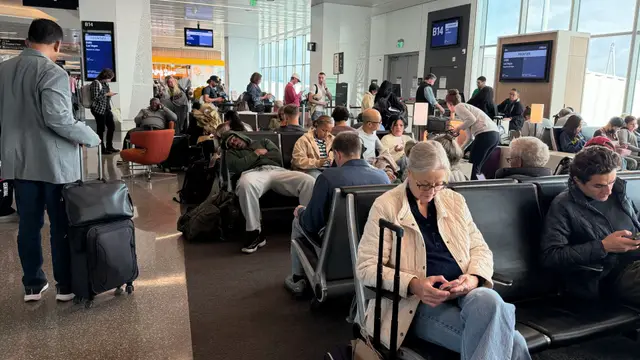
The image of a delayed flight, a familiar frustration for many, took on a national scale Friday evening when the Federal Aviation Administration (FAA) issued a ground stop, halting all flight departures across the country for more than four hours. While the FAA lifted the ground stop at 8:15 p.m. ET on Friday, the ripple effects are still being felt this weekend, disrupting travel plans and highlighting vulnerabilities in our nation’s air traffic control system. The incident underscores a reality many travelers know well: the delicate balance between efficiency and safety in a system vital to our economy and connectivity.
The FAA’s decision to halt all flight departures nationwide stemmed from “extraordinary circumstances” related to communication issues at regional air traffic control centers. According to the agency, they “thoroughly tested our systems” before resuming flights, emphasizing their commitment to safety. As of early Saturday, more than 6,200 flights were delayed and over 3,400 were canceled, a staggering disruption impacting countless travelers across the country. Transportation Secretary Sean Duffy addressed the situation during a Friday press briefing, stating that college football teams traveling on charter flights could receive priority scheduling to help them reach their destinations. The Southeastern Conference (SEC) announced on X that some games had been moved to Sunday due to the flight disruption, demonstrating the widespread impact of the ground stop. “We are in close communication with our member institutions to assess potential disruptions and coordinate appropriate responses,” the SEC said in a statement.
Homeland Security Secretary Markwayne Mullin expressed concerns about the “outdated” air traffic control system, suggesting it posed a “national security risk.” He clarified that there was no evidence of a cyberattack or “SI attack,” referring to artificial intelligence. Duffy added that telecommunications routers were overloaded with data, leading to their failure. This suggests a systemic fragility within the infrastructure supporting air travel, a vulnerability that demands immediate attention and investment.
The ground stop’s impact extended beyond simply delayed arrivals and missed connections; it created a cascade of logistical challenges for airlines, airports, and travelers alike. The disruption forced teams to scramble for alternative travel arrangements, with some games being postponed or rescheduled. NBA, NHL, and college teams struggled to reach their destinations in time for games this weekend. Teams like Texas and Tennessee returned to their campuses during the ground stop, while Auburn opted to take a bus to Mississippi State and Purdue traveled from West Lafayette, Indiana, for their game at Iowa. The Big 12 Conference was evaluating potential changes to Saturday's football schedule. Washington spokesman Kurt Svoboda said the Huskies returned to campus when flights were grounded, but officials stayed in touch with their Alaska/Hawaiian Airlines partners and their flight crew remained in place; the Huskies planned to fly out late Friday. The Nets, among five NBA teams scheduled to fly Friday, had just boarded the team plane in New Orleans when their flight to Memphis was halted. JuJu Watkins and her Southern California teammates, attempting to get to South Carolina for their Sunday game against the top-ranked Gamecocks, were deboarded at Los Angeles International Airport and returned to the Galen Center.
While some flights have resumed, the FAA is working to ensure a steady flow of air traffic. Secretary Duffy emphasized that telecommunications routers were overloaded with data, causing them to go down. The agency is also prioritizing larger movements, allowing general aviation to take lower priority. Transportation Secretary Duffy encouraged football teams to reach out to the FAA to schedule their flight times. The FAA’s statement emphasized that the safety of the flying public remains its top priority.
The incident has reignited the debate surrounding the modernization of the nation’s air traffic control system, a project that has been underway for years but has faced numerous challenges. The current system relies on outdated technology and processes, making it vulnerable to disruptions and hindering efficiency. The Biden administration has proposed significant investments in air traffic control modernization, but progress has been slow. The incident underscores the urgency of these efforts and the potential consequences of continued delays.
The scenes of stranded travelers and disrupted sports schedules were jarring, but beneath the immediate inconvenience lies a deeper concern: the fragility of systems we rely on daily. This incident isn’t just about delayed flights; it’s a symptom of an infrastructure struggling to keep pace with the demands of a rapidly evolving world. For families, it underscores the importance of resilience and adaptability – the ability to navigate unexpected challenges with grace and resourcefulness.
The fact that our air traffic control system, so crucial to our economy and connectivity, is still reliant on outdated technology is a sobering thought. It’s a reminder that progress isn’t automatic; it requires sustained investment, careful planning, and a willingness to embrace innovation. As we look ahead, it’s essential that we not only address the immediate issues but also prioritize the long-term health and resilience of our infrastructure. This isn’t just about preventing future flight delays; it's about safeguarding the well-being of our communities and ensuring a stable future for generations to come. The strength of a community is measured not only by its successes but also by its ability to weather adversity, and this incident provides an opportunity to strengthen our resolve and build a more robust and reliable system for all.
For travelers experiencing flight disruptions, the following resources are available:
For those seeking to understand the complexities of air traffic control modernization, the FAA website provides detailed information about ongoing initiatives and future plans. The incident serves as a reminder that transparency and communication are essential for building trust and ensuring accountability within vital public services. Cathay Pacific warned of delays for flights bound for Hong Kong.
The incident highlights the need for continued vigilance and investment in our nation's infrastructure to ensure the safety and reliability of air travel for all.
Toronto
Business
Saturday, November 14, 2026
5 min
By Marcus Chen

By Marcus Chen

By Marcus Chen

By Katherine Langford