
Real Estate
BVK Pension Fund Raided Over US Business, Munich Prosecutors Say
By Katherine Langford
Advertisement · Why this ad?
Marcus manages the day-to-day editorial workflow across all brands, coordinating coverage assignments and ensuring editorial standards are met. He previously served as city editor at the Pioneer Press and holds a degree in Political Science from Carleton College.
More from Marcus →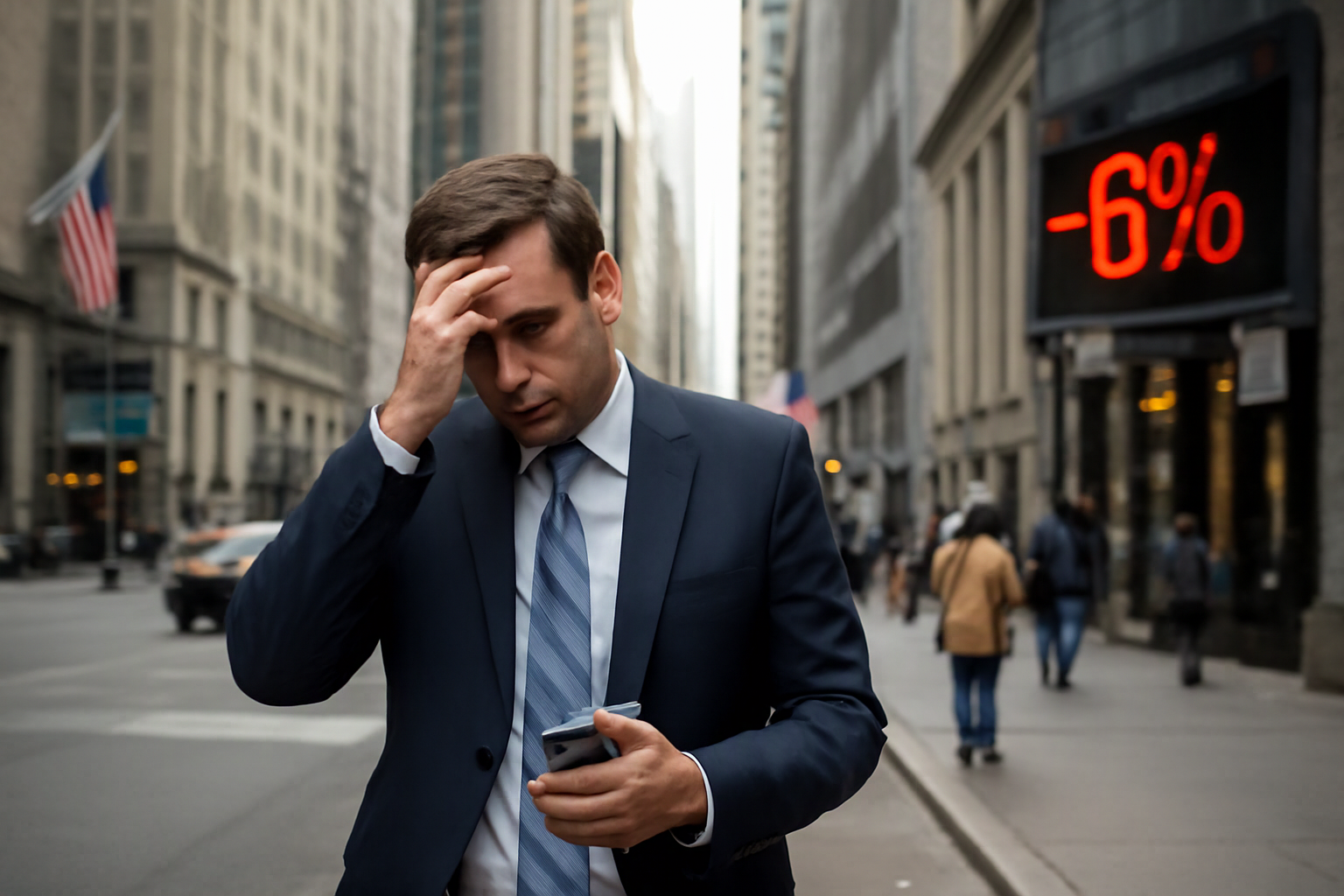
As the sun set over New York City on a brisk November evening, traders were glued to their screens, watching the Nasdaq 100 tumble. The index, which tracks the performance of 100 of the largest non-financial companies listed on the Nasdaq stock exchange, plunged by 6% as investors reacted to the fallout from the recent midterm elections. The Democratic sweep raised concerns about potential regulatory changes impacting the technology sector, particularly chip stocks.
On Thursday, November 9, 2023, the Nasdaq 100 experienced its most significant drop in months, largely driven by a wave of sell-offs in semiconductor stocks. Companies like Nvidia and AMD saw their shares slide dramatically as traders reevaluated the market's direction in light of the election results. The Democratic Party's control of both the House and Senate prompted fears that tighter regulations and increased scrutiny on the tech industry could be on the horizon.
This drastic shift in market sentiment came as a surprise to many analysts who had predicted a more balanced outcome in the midterms. With the Democrats securing key positions, including the governorships and several Senate seats, the implications for the technology sector could be profound. Investors are now bracing for potential changes that could affect everything from data privacy regulations to antitrust actions against major tech firms.
The immediate aftermath of the midterms saw a significant sell-off in technology stocks, particularly those tied to cloud computing and data centers. Analysts noted that the market's reaction was fueled by uncertainty surrounding potential policy changes that could adversely affect the profitability of these companies. The semiconductor sector, which has been a critical driver of growth in recent years, felt the brunt of this volatility.
Traders reported a flurry of activity as they sought to offload shares in companies like Intel and Qualcomm. The sell-off was not limited to just chipmakers; broader tech stocks, including giants like Amazon and Microsoft, also experienced declines. The Nasdaq's drop was a stark reminder of how quickly market sentiment can shift based on political developments.
The implications of this market downturn extend beyond Wall Street. For many New Yorkers invested in tech stocks or working in the sector, the sudden drop raises concerns about job security and economic stability. Tech companies have been a significant source of employment in the city, and any potential downturn could ripple through the local economy.
Local businesses that rely on the tech industry for clients and partnerships are also feeling the pressure. From startups to established firms, the uncertainty surrounding the future of technology regulations could lead to a slowdown in investment and hiring. Community leaders are urging residents to remain calm and focus on the long-term potential of the tech sector, emphasizing the importance of resilience in the face of adversity.
Moreover, the tech sector has been a lifeline for many neighborhoods in New York City, particularly in areas like Brooklyn and Manhattan, where innovation hubs have sprung up. These neighborhoods have seen an influx of talent and investment, contributing to local economies. The sudden downturn raises the stakes for these communities, as the potential for reduced hiring could lead to increased competition for jobs in a city already grappling with high living costs.
Local organizations like the New York Tech Alliance and the NYC Startup Community are working to support businesses and professionals affected by the downturn. They are providing resources, networking opportunities, and workshops to help navigate the challenging landscape. "We need to adapt and innovate, not just in our businesses but in how we support each other as a community," said Maria Gonzalez, a local entrepreneur and member of the Tech Alliance.
The impact of the downturn is particularly concerning for young professionals and recent graduates who have flocked to New York City in search of opportunities in tech. Many of these individuals have invested significant time and resources into their education and career paths, and the current market volatility may force them to reconsider their plans. Some may even find themselves in a position where they need to pivot to different industries, which could be a daunting task in a city known for its competitive job market.
Looking ahead, analysts are divided on the future of the tech market. Some believe that the recent sell-off presents a buying opportunity for savvy investors, while others caution that the regulatory environment could lead to prolonged volatility. As the new Congress convenes, all eyes will be on how the Democratic majority approaches tech regulation.
Industry experts suggest that companies will need to adapt quickly to the changing landscape, focusing on compliance and transparency to mitigate potential risks. The semiconductor industry, in particular, may need to brace for increased oversight as lawmakers look to address concerns over data privacy and monopolistic practices.
Furthermore, discussions about the future of technology regulations are likely to intensify in the coming months. Stakeholders from various sectors, including privacy advocates, tech leaders, and policymakers, will engage in dialogues aimed at shaping a balanced approach to regulation that supports innovation while protecting consumers. The outcome of these discussions could have lasting implications for the tech ecosystem in New York and beyond.
As the dust settles from the midterm elections, local investors and tech professionals are also considering their strategies moving forward. Many are looking to diversify their portfolios, while others are taking a wait-and-see approach. The uncertainty may lead to a temporary slowdown in investments, but some experts believe that the long-term outlook for the tech sector remains positive, especially as new technologies continue to emerge.
In addition, community forums are being organized to facilitate discussions among tech workers, investors, and policymakers. These forums aim to address concerns and share insights on how to navigate the shifting landscape. Local leaders are emphasizing the importance of collaboration and innovation in overcoming challenges, with many expressing hope that the tech sector will emerge stronger from this period of uncertainty.
In the wake of the midterm elections, the Nasdaq 100's sharp decline serves as a stark reminder of the interplay between politics and the stock market. As New Yorkers grapple with the implications of a Democratic-controlled Congress, the tech sector's future remains uncertain. However, the resilience of the industry and the commitment of local communities to support one another may help navigate the challenges ahead. The ongoing dialogue around regulation and innovation will be critical in determining how the tech landscape evolves in the coming years, and the community's response to these changes will play a pivotal role in shaping a sustainable future for New York's tech ecosystem.
By Katherine Langford

By Katherine Langford

By Marcus Chen

By Katherine Langford